Knowing how to calculate engagement rate on Facebook helps you understand whether your content genuinely connects with your audience. You rely on this metric to evaluate reactions, comments, shares, and other interactions that signal interest and relevance. When you calculate engagement rate on Facebook correctly, you move beyond vanity metrics and gain insight you can act on.
This guide explains every major calculation method, shows when each approach makes sense, and helps you avoid common reporting mistakes. You will learn how to interpret engagement data confidently and apply it to improve your Facebook strategy.
By the end, you will know exactly how to calculate engagement rate on Facebook and use it to drive better results.
What Facebook Engagement Rate Really Measures
Facebook engagement rate measures how actively people interact with your content compared to the size of your audience or the reach of a post. You count actions like reactions, comments, and shares to see how much attention your posts earn. This metric shifts your focus from raw follower numbers to meaningful interaction.
When you calculate engagement rate on Facebook, you gain a clearer view of content quality and relevance. A smaller page with high engagement often outperforms a larger page with passive followers.
If you want to handle engagement calculations with precision, understanding numerical accuracy matters, just like learning how to use a scientific calculator helps you avoid small errors that distort results.
Why Engagement Rate Matters for Your Facebook Strategy
You calculate engagement rate on Facebook to understand what truly resonates with your audience. Posts with strong engagement signal value to Facebook’s algorithm, which can increase organic reach and visibility. This makes engagement rate a direct driver of long-term growth.
Engagement rate also allows you to compare performance over time without being misled by follower growth alone. Instead of guessing what works, you rely on data that reflects real user behavior. Understanding core calculation concepts, similar to knowing what is a scientific calculator, helps you apply the right logic when interpreting engagement percentages.
The Core Actions Included in Facebook Engagement
When you calculate engagement rate on Facebook, you combine several interaction types into a single metric. These actions usually include likes and reactions, comments, and shares, each showing a different level of audience involvement. Reactions are quick signals of approval, while comments and shares reflect deeper engagement.
In some cases, you may also include clicks or video views, especially when measuring content designed to drive traffic or watch time. Understanding these engagement components helps you interpret your results accurately. It also helps you align engagement data with your campaign goals.
The Standard Formula to Calculate Engagement Rate on Facebook
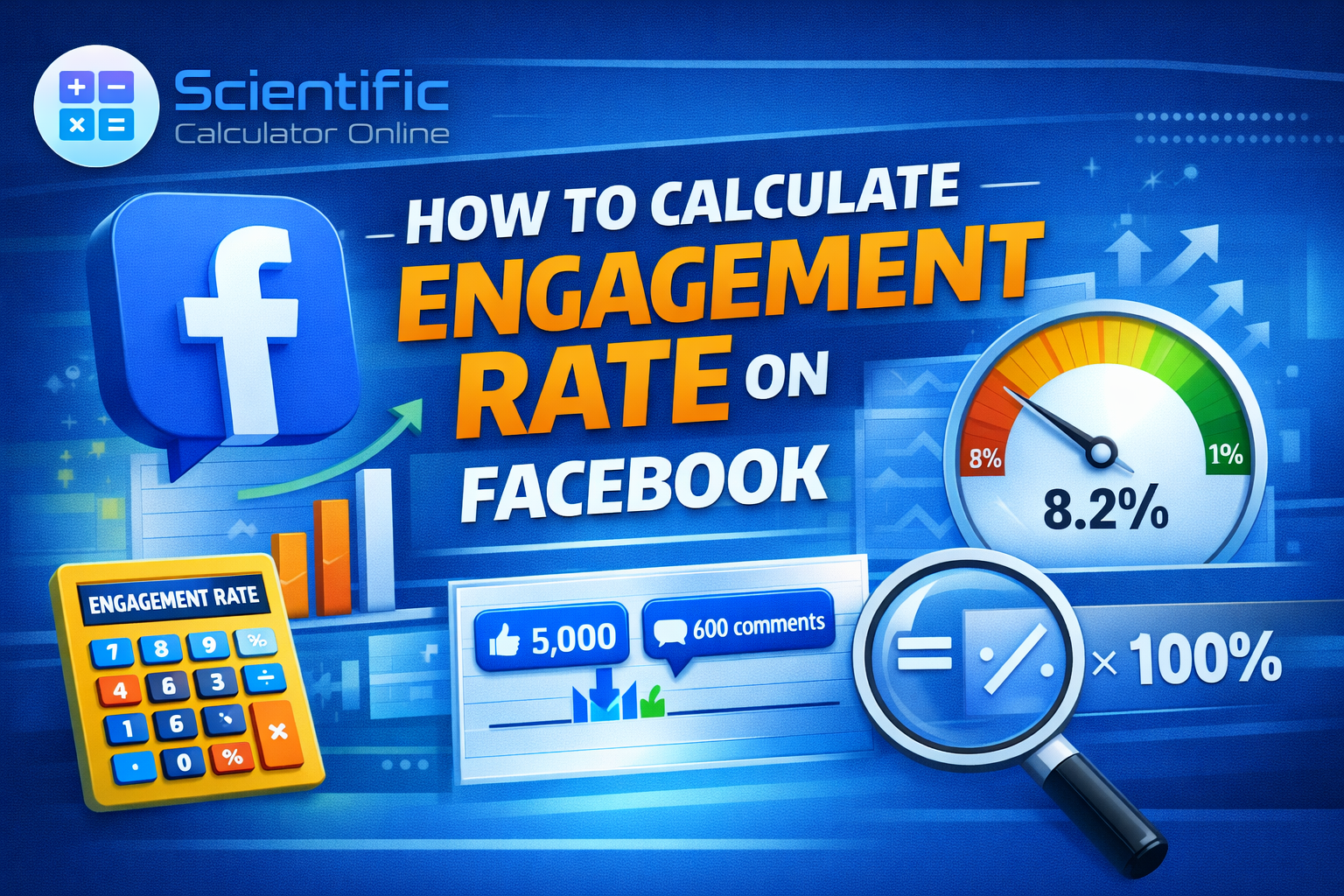
The most widely used method to calculate engagement rate on Facebook divides total engagement by total followers and multiplies the result by 100. This gives you a percentage that reflects interaction relative to your audience size. It works well for consistent tracking across months and campaigns.
Follower-based engagement rate is easy to calculate and compare over time. Because follower counts change gradually, this formula keeps your data stable and reliable. When you are handling large engagement totals, tools like a long addition calculator can help you quickly verify summed interactions without mistakes.
When You Should Use Reach-Based Engagement Rate
Sometimes follower-based calculations do not tell the full story. In those cases, you should calculate engagement rate on Facebook using reach instead of followers. This means dividing total engagement by the number of people who actually saw the post.
Reach-based engagement rate removes inactive followers from the equation. It shows how engaging your content was for the audience exposed to it. This approach is especially useful for campaigns, boosted posts, and viral content where reach varies widely.
Impressions-Based Engagement Rate Explained
Another way to calculate engagement rate on Facebook is by using impressions as the baseline. You divide total engagement by total impressions, then multiply by 100. This method accounts for repeated views by the same users.
Impressions-based engagement rate helps you understand how frequency affects interaction. It is particularly useful for paid campaigns where users may see the same post multiple times. While less common for organic posts, it adds depth to advanced analysis.
How to Calculate Engagement Rate for Individual Posts
Post-level engagement rate shows you how specific pieces of content perform. You calculate it using engagement actions and either followers or reach for a single post. This helps you compare formats, topics, and creative styles.
When you calculate engagement rate on Facebook at the post level, patterns become easier to spot. You may discover that videos outperform images or that questions drive more comments. These insights guide smarter content planning and experimentation.
What Is Considered a Good Facebook Engagement Rate
A good Facebook engagement rate depends on your industry, audience size, and content type. In general, rates between one percent and five percent indicate healthy interaction for most pages. Higher rates usually signal strong relevance and audience interest.
Larger pages often see lower engagement percentages due to broader audiences. Smaller or niche pages may achieve higher rates because their communities are more focused. The most important benchmark is your own historical performance over time.
Common Mistakes to Avoid When Calculating Engagement Rate
One frequent mistake is switching between calculation methods without consistency. If you calculate engagement rate on Facebook using followers one month and reach the next, comparisons lose meaning. You should choose one method and stick with it for trend analysis.
Another mistake is ignoring context such as post type and timing. Engagement naturally varies by format and schedule, which can distort averages. Segmenting your data prevents misleading conclusions and improves accuracy.
Using Engagement Rate to Improve Content Performance
Engagement rate becomes powerful when you use it to guide decisions. You should analyze your highest-engagement posts and identify common traits such as tone, format, or posting time. Replicating these elements improves future performance.
Testing becomes more effective when guided by engagement data. You can refine captions, calls to action, and content themes with confidence. Over time, this turns engagement rate into a continuous optimization tool.
Tracking Engagement Rate with Facebook Insights
Facebook Insights gives you access to all the data required to calculate engagement rate on Facebook accurately. You can see reactions, comments, shares, reach, and impressions in one dashboard. This ensures your calculations are based on reliable platform data.
Exporting Insights data allows deeper analysis and reporting. Regular tracking helps you detect trends early and adjust strategy proactively. Consistent measurement keeps your performance aligned with your goals.
Organic Versus Paid Engagement Rate Differences
Organic and paid posts often generate engagement differently. Organic content typically reaches your most interested followers, which can lead to higher engagement relative to reach. Paid content reaches broader audiences who may engage less initially.
When you calculate engagement rate on Facebook, you should separate organic and paid results. Mixing them can distort insights and lead to poor decisions. Each content type requires its own benchmarks and optimization approach.
Advanced Tips for More Accurate Engagement Analysis
You can gain deeper insight by segmenting engagement data by demographics, post format, or time of day. This reveals which audience segments interact most and when they are most active. These insights improve targeting and scheduling decisions.
Focusing on high-quality interactions also improves analysis. Prioritizing comments and shares over passive reactions gives a clearer picture of true resonance. This approach aligns engagement data with meaningful outcomes.
How Often You Should Review Engagement Rate
Weekly reviews help you spot short-term changes and respond quickly. Monthly reviews provide a broader view of trends and strategy effectiveness. Both frequencies play an important role in performance management.
Regular monitoring keeps you prepared for algorithm changes and shifts in audience behavior. When engagement rate review becomes routine, your strategy stays flexible and responsive. Consistency is key to long-term improvement.
Conclusion
Understanding how to calculate engagement rate on Facebook allows you to measure real interaction instead of guessing performance. You gain clarity on what works, what does not, and where to focus your efforts next. This knowledge helps you build content that resonates and grows sustainably.
When you apply consistent formulas, review data regularly, and interpret results accurately, engagement rate becomes a strategic advantage rather than just another metric.