You want to know how to calculate engagement rate on Instagram because follower numbers alone no longer explain real performance. Engagement rate shows how actively people interact with your content and whether your posts truly resonate with your audience. When you understand this metric clearly, you gain insight into content quality, audience interest, and long-term growth potential.
Instagram engagement rate helps you measure likes, comments, saves, shares, and other interactions in context rather than isolation. Instead of guessing what works, you can rely on consistent data to improve content decisions and posting strategy.
What Engagement Rate on Instagram Really Means
Engagement rate on Instagram measures the percentage of people who interact with your content compared to your audience size or reach. It shows how compelling your posts are to the people who actually see them. When engagement is strong, your content sparks interest, conversation, and meaningful action.
You should treat engagement rate as a quality indicator rather than a vanity metric. A smaller account with high engagement often outperforms a larger account with inactive followers. This metric helps you evaluate whether your content aligns with audience expectations and platform behavior.
Engagement rate also affects visibility on Instagram because content that earns interactions is more likely to be surfaced in feeds and discovery areas. When you calculate engagement rate on Instagram regularly, you gain clarity on what supports sustainable growth.
Why Engagement Rate Matters More Than Follower Count
Follower count represents potential reach, but it does not reflect real audience behavior. Engagement rate reveals whether followers are actually responding to your content. This difference matters when assessing performance, partnerships, and campaign results.
You need engagement rate to judge content effectiveness accurately. High engagement signals relevance and trust, which are far more valuable than inflated numbers. Brands increasingly prioritize engagement when evaluating creators and accounts. If you are looking for a shortcut to owning a high-performing profile, you can buy your Instagram account at SwapSocials and start with an audience that is already engaged.
Instagram’s algorithm also favors interaction-driven content. Understanding how engagement works helps you align content with platform priorities and audience intent.
Types of Instagram Engagement You Should Track
Instagram engagement includes multiple interaction types that reflect different levels of interest. Likes indicate quick approval, while comments show deeper involvement. Saves and shares often signal strong value because users want to revisit or recommend content.
You should always include saves and shares when calculating engagement rate on Instagram because they reflect meaningful intent. Stories, Reels, and carousel interactions also play a role in overall engagement patterns.
Understanding each engagement type helps you refine content formats and calls to action. For example, educational content often generates saves, while entertaining content earns more shares.
How to Calculate Engagement Rate on Instagram by Followers
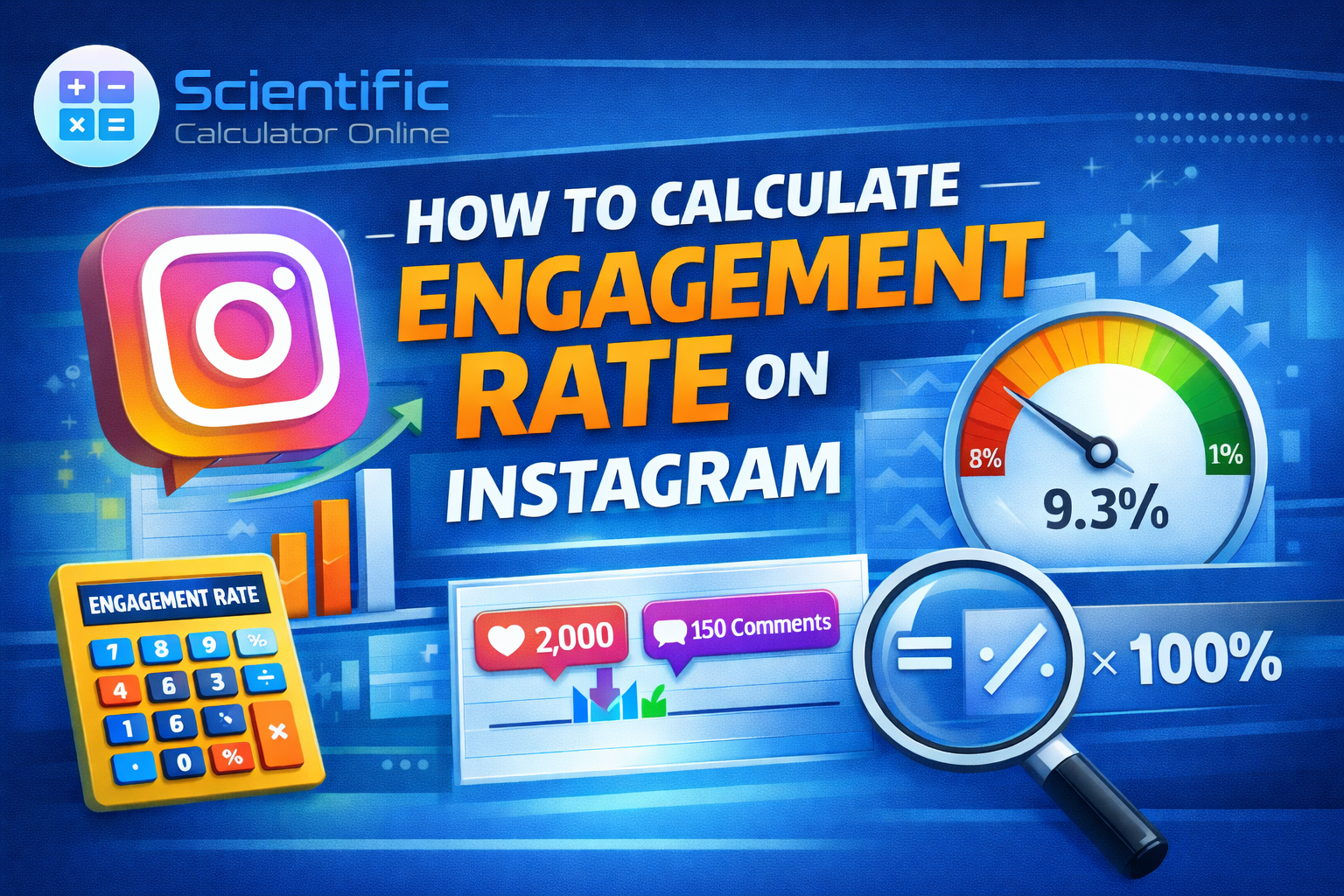
The follower-based formula is the most widely used method for calculating engagement rate. You divide total engagements by total followers and multiply by 100 to get a percentage. This approach offers a consistent baseline for comparison.
Use this method when you want to benchmark performance over time or compare similar accounts. It works well for long-term tracking and general performance analysis. However, it does not account for how many followers actually saw the post.
Still, calculating engagement rate on Instagram by followers provides a stable reference point. When combined with reach-based metrics, it offers a more complete performance picture.
For a clearer understanding of how calculations work in practice, this breakdown of how to use advanced calculator functions correctly can be helpful.
How to Calculate Engagement Rate on Instagram by Reach
Engagement rate by reach focuses on people who actually viewed your content. You calculate it by dividing total engagements by reach and multiplying by 100. This method reflects real viewer interaction more accurately.
You should use reach-based engagement when analyzing post performance inside Instagram Insights. It helps you understand how engaging your content is to the audience that actually saw it. This makes it especially useful for campaigns and promoted posts.
Calculating engagement rate on Instagram by reach removes assumptions about visibility and provides a clearer view of content effectiveness.
Engagement Rate by Impressions and When to Use It
Engagement rate by impressions measures interactions relative to total views, including repeated exposure. You divide engagements by impressions and multiply by 100. This method is useful for viral or short-form content.
You should rely on impression-based engagement when evaluating Reels or boosted posts. High impressions with low engagement may indicate passive consumption rather than real interest.
This calculation helps distinguish visibility from meaningful interaction and supports better content optimization.
What Is a Good Engagement Rate on Instagram
A good engagement rate on Instagram varies by account size, niche, and content type. Smaller accounts often see higher percentages, while larger accounts may have lower rates but higher total interactions.
You should benchmark engagement against similar accounts in your industry rather than chasing universal numbers. Trends over time matter more than isolated metrics.
If your engagement rate improves steadily, your strategy is moving in the right direction. Consistent tracking helps you make informed adjustments.
Common Mistakes When Calculating Engagement Rate on Instagram
One common mistake is excluding saves and shares from engagement calculations. These actions often reflect stronger intent than likes alone. Ignoring them can undervalue content performance.
Another mistake is switching formulas frequently, which makes comparisons unreliable. You should choose one primary method and use it consistently.
Avoid comparing accounts with different goals or audiences. Engagement rate is most useful when aligned with your specific strategy.
How to Use Engagement Rate to Improve Your Instagram Strategy
Engagement rate should guide content decisions, not just reporting. Analyze high-performing posts and identify patterns in format, timing, and messaging. Apply those insights to future content.
Test variations in captions, visuals, and posting times while tracking engagement changes. This data-driven approach helps refine your strategy efficiently.
Engagement rate also supports better collaboration decisions because it reflects authentic audience connection rather than surface-level reach.
Conclusion
Now you know how to calculate engagement rate on Instagram using reliable and practical methods. Each formula offers a different perspective, helping you measure interaction accurately and consistently. When you track engagement over time, you gain clarity on what truly works.
Engagement rate reflects trust, relevance, and audience connection. By focusing on meaningful interaction, you strengthen visibility and support sustainable Instagram growth.
Frequently Asked Questions About Instagram Engagement Rate
- How do you calculate engagement rate on Instagram accurately?
You calculate engagement rate on Instagram by dividing total interactions like likes, comments, saves, and shares by followers or reach, then multiplying by 100. This percentage shows how actively people respond to your content rather than how many simply follow you.
- Which engagement rate formula is best for Instagram growth tracking?
The best formula depends on your goal. Use follower-based engagement for long-term growth tracking and reach-based engagement to measure post performance. If you want precise insights, tracking both consistently gives you a clearer understanding of audience behavior and content effectiveness.
- What counts as engagement when calculating Instagram engagement rate?
Engagement includes likes, comments, saves, shares, replies, and interactions with Stories or Reels. Saves and shares are especially valuable because they show strong interest. Including all meaningful interactions helps you calculate engagement rate on Instagram more accurately.
- What is considered a good engagement rate on Instagram today?
A good Instagram engagement rate varies by niche and audience size, but steady improvement matters more than a fixed number. Smaller accounts often see higher percentages, while larger accounts have lower rates. Comparing yourself to similar accounts gives more reliable benchmarks.
- Why is engagement rate more important than follower count?
Engagement rate shows how many people actually care about your content. A large follower count means little if followers do not interact. High engagement signals relevance, trust, and stronger algorithm visibility, making it a better indicator of real Instagram performance.
- How often should you calculate engagement rate on Instagram?
You should calculate engagement rate regularly, ideally weekly or monthly. Consistent tracking helps you spot trends, identify successful content, and correct declining performance early. One-time calculations provide limited insight compared to ongoing measurement over time.
- Does Instagram engagement rate affect reach and visibility?
Yes, higher engagement often leads to greater visibility. Instagram prioritizes content that receives interactions because it signals relevance. When your posts generate meaningful engagement, they are more likely to appear in feeds, Explore sections, and recommended content placements.
- Should you calculate engagement rate for each post or overall account?
You should do both. Post-level engagement helps identify what content works best, while account-level engagement shows overall audience health. Combining both views helps you refine strategy and understand how individual posts contribute to long-term performance.
- Why do engagement rates drop even when posting consistently?
Engagement can drop due to content fatigue, audience mismatch, algorithm changes, or posting at the wrong time. Calculating engagement rate on Instagram helps you diagnose these issues early so you can adjust formats, messaging, or timing to restore interaction.
- Can engagement rate help you choose better content formats?
Yes, engagement rate reveals which formats your audience prefers. Comparing engagement across Reels, carousels, images, and Stories helps you focus on content that drives interaction. Using engagement data ensures your strategy is guided by real audience behavior.